Case study · PTC Innovation
Design Innovation
AR and IoT at the edge of what was possible.
Four projects. One through-line.
Every project here sits at the same intersection: complex physical operations, the people who run them, and technology that could make their work less hard. The form factor changed (factory floor, elevator shaft, HoloLens, iPad), but the design challenge was always the same: make something genuinely new feel immediately useful.
Project 3 of 4
Vuforia Expert Capture
Onboarding for a HoloLens: designing for a new kind of computer.
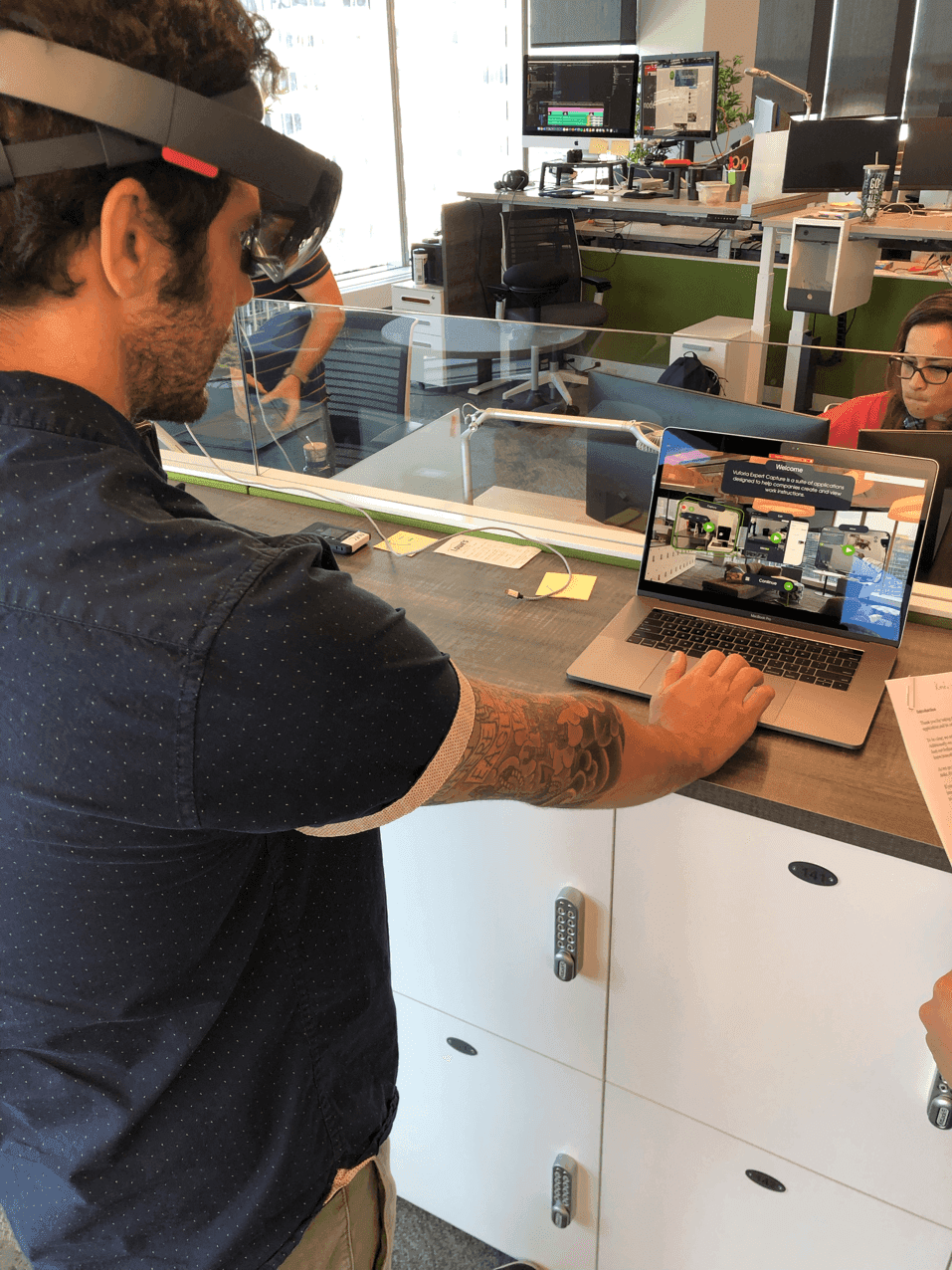
Vuforia Expert Capture is a PTC product that lets organizations capture expert knowledge as AR-guided work instructions: recording what an expert does and replaying it as spatial guidance for someone learning the same task. The challenge was designing an onboarding experience for the Microsoft HoloLens version.
Designing for HoloLens is a fundamentally different problem than designing for a screen. There is no mouse, no touchscreen, no conventional UI affordances. Interaction happens through gaze, gesture, and voice in a three-dimensional space. The onboarding experience had to teach users both how to use the product and how to use an entirely new interaction paradigm simultaneously.
Designing for spatial UI
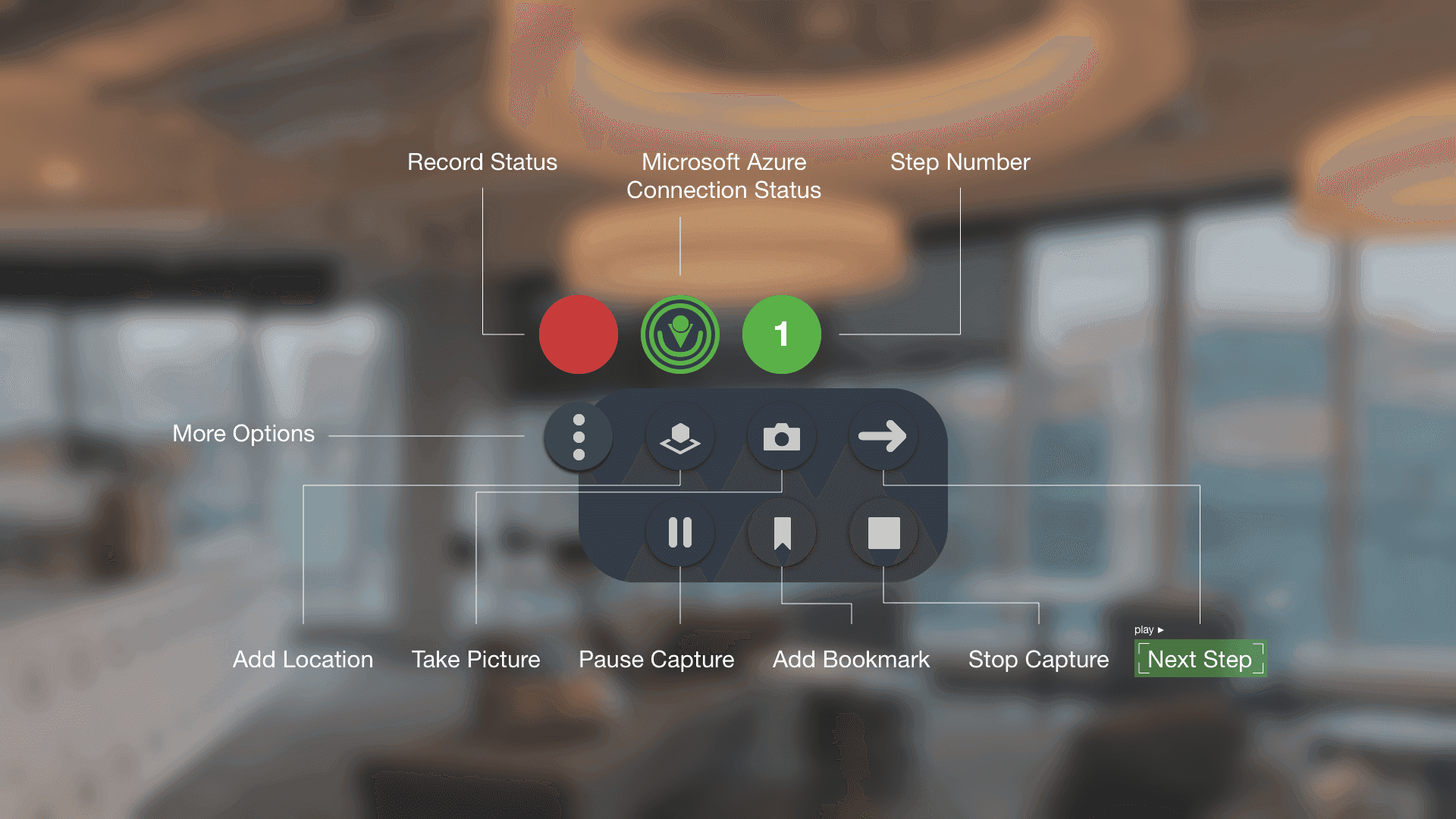
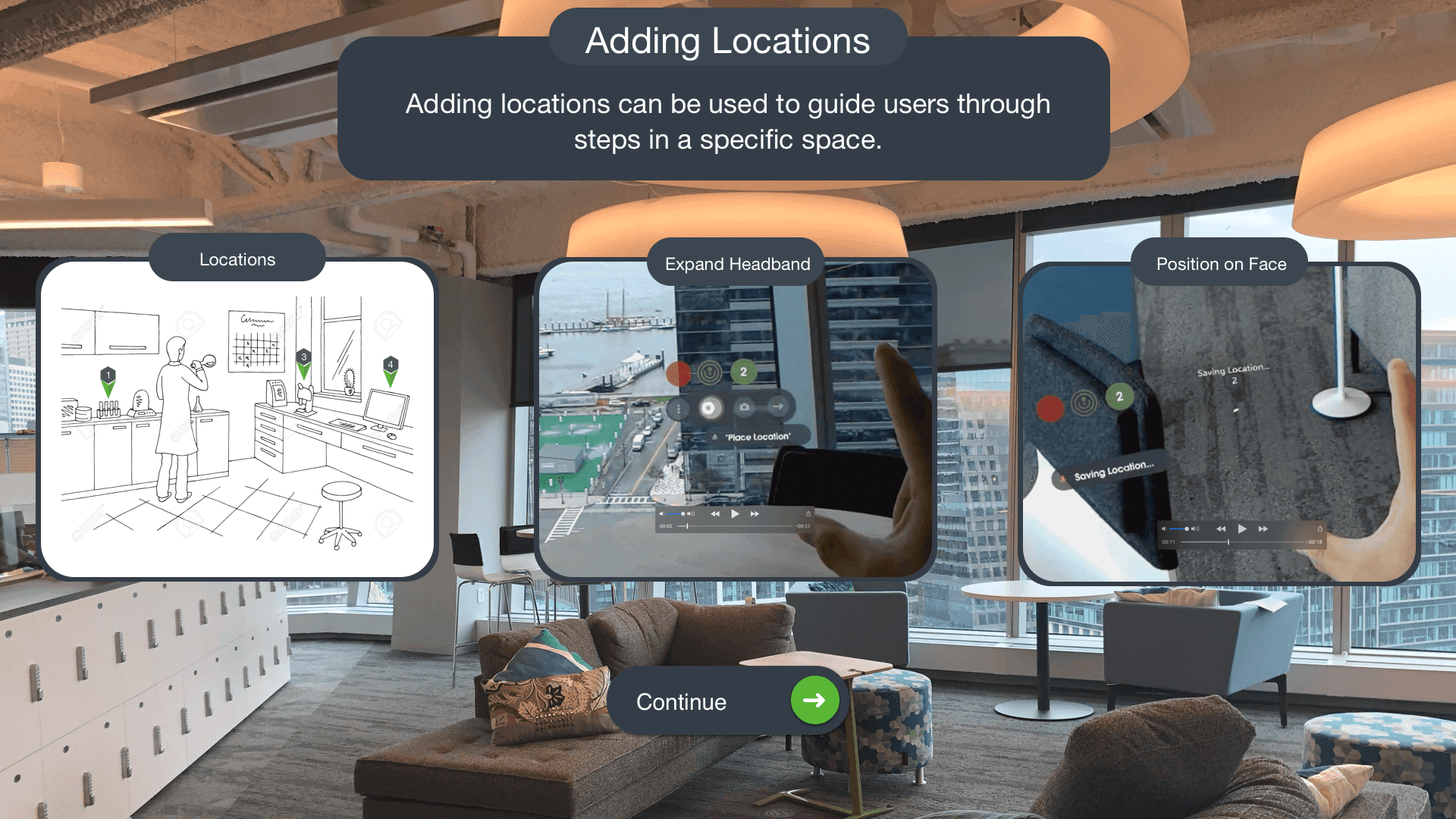
HoloLens onboarding meant designing for a user who has never interacted with a spatial computer before. Every affordance (how to select, how to navigate, where to look) had to be taught without the conventions a screen would provide. The onboarding experience was itself the first lesson in spatial interaction.
What sprint work teaches you that nothing else does.
These projects shaped how I think about design process in ways that are hard to replicate in a normal product cycle. A week is an incredibly clarifying constraint. You cannot over-research, over-design, or over-polish. You have to make decisions with incomplete information and commit to them. That muscle, confident decision-making under real constraints, is one of the most valuable things a designer can develop.
The onsite work at Otis also reinforced something I had learned in factory visits for DPM: you cannot design well for a physical environment you have never been in. Reading about elevator installation is not the same as standing on a construction site watching it happen. Context is not optional.
And Elements AR reminded me that designing for delight is a skill, not a given. Enterprise work trains you to prioritize clarity and efficiency. EdTech work trains you to make something that makes someone smile. Both matter. The best products do both.