Case study · Stavvy
Fintech
Modernizing the mortgage experience, from closing table to closing time.
Year · 2022–2024
Role · Head of Design (+ Acting Director of Product)
Product · Stavvy Mortgage Platform
Closing on a home is one of the most stressful experiences in a person's life. It doesn't have to be.
Buying a house means navigating a gauntlet of documents, signers, notaries, lenders, title agents, and deadlines: most of it still running on fax machines and wet signatures well into the 2020s. Stavvy was built to change that: a platform for remote online notarization, eSign, document management, and the full digital mortgage lifecycle.
The people who used Stavvy loved it. Loan officers, title agents, and homebuyers consistently cited the experience as the best they'd encountered in an industry notorious for clunky, legacy software. That didn't happen by accident; it was the result of a design and research function that treated validation as non-negotiable and craft as a competitive advantage.
I led that function as Head of Design, eventually carrying the additional weight of acting Director of Product for several months while our Director was on maternity leave. I oversaw a team of five designers and two researchers across every product surface Stavvy shipped. This is some of the most complete design leadership I've done.
Context
- Role
- Head of Design
- Additional role
- Acting Director of Product (interim, during Director's maternity leave)
- Team
- 5 designers, 2 researchers
Products
- Origination
- Servicing
- SmartDocs
- eVault
- eRegistry
- Mobile eSign
- White-label Homeowner Portal
Users
- Loan officers
- Title agents & notaries
- Mortgage servicers
- Homebuyers & consumers
An industry running on paper, fax machines, and stubbornness.
The mortgage industry is one of the last major sectors to fully digitize: not for lack of trying, but because the regulatory environment, the number of stakeholders involved, and decades of entrenched process made it genuinely hard to change. A single home closing can involve a lender, a title company, a notary, an attorney, a buyer, a seller, and a servicer, each with their own systems, requirements, and definitions of "done."
Stavvy's insight was that the signing and notarization moment (the closing table) was the highest-leverage place to intervene. If you could make that experience digital, compliant, and actually pleasant, you could pull the rest of the workflow along with it.
Design's job was to make that work for everyone at the table: the loan officer who does this fifty times a month, the title agent juggling twelve simultaneous closings, and the homebuyer doing this for the first time in their life, probably from their kitchen table on a laptop they're not sure how to use.
Five products. One experience.
The design challenge at Stavvy wasn't just making individual screens good; it was making a portfolio of products feel like a single, coherent platform. That meant shared patterns, a living design system, and constant negotiation between what engineering could build and what users actually needed.
Modernizing the experience
Evolution, not revolution: upgrading a product people already loved.
Stavvy users were vocal about what they liked. The design language had warmth and clarity that competitors lacked. But as the product grew, inconsistencies crept in: navigation patterns that didn't scale, information density that required too much scrolling, accessibility gaps that we couldn't ignore.
Rather than a full visual overhaul, we pursued a deliberate, phased modernization, lifting the interface incrementally, tied to design system work, in a way that didn't disrupt the workflows users depended on daily.
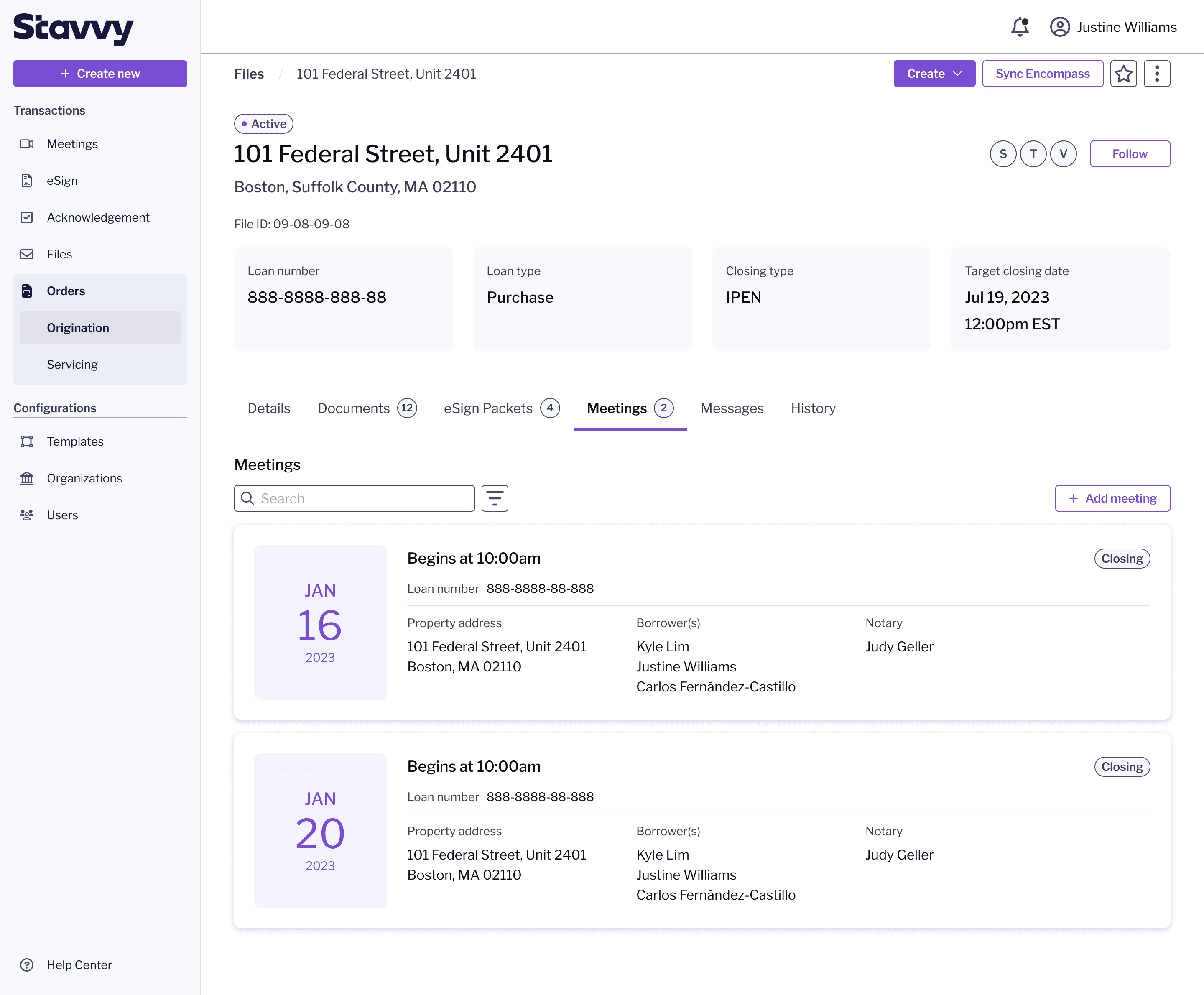
File Details redesign
The File Details page is the primary workspace for managing a closing: documents, orders, participants, meetings, all in one place. The original design used a dark sidebar that created visual weight without adding clarity. Information was organized vertically, requiring excessive scrolling to find relevant context.
The redesign lightened the interface, updated navigation patterns, introduced more deliberate white space, and made the page genuinely scannable. Accessibility was a core requirement throughout, not a checkbox at the end.
Document Preparation redesign
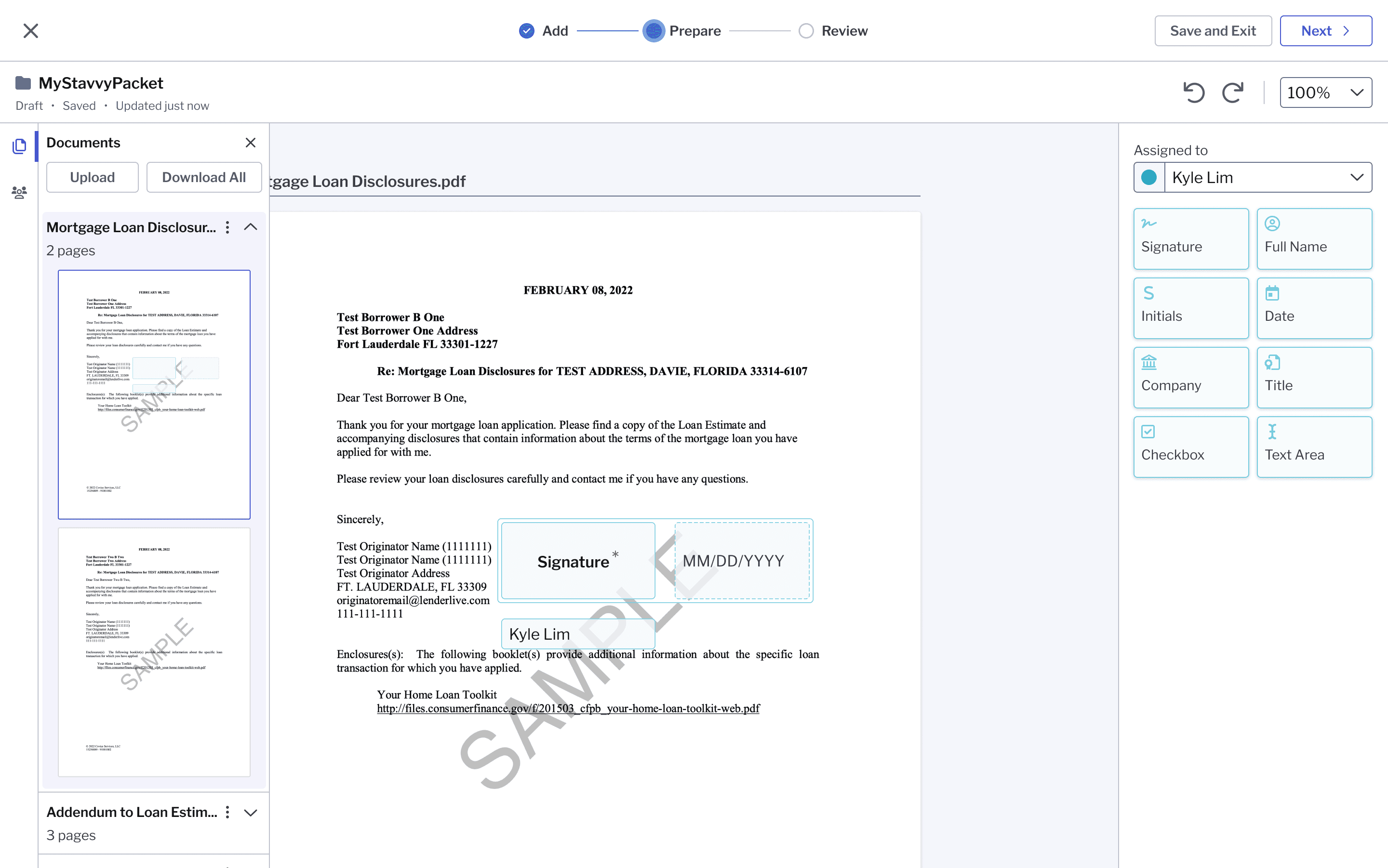
Document preparation (placing annotations, assigning signers, configuring signing order) was one of the most-used and most-complained-about workflows in the product. The original UI was cluttered, low-contrast, and difficult to navigate with a keyboard.
The redesign decluttered the workspace, improved document navigation and context, and made keyboard accessibility a first-class requirement. Every action needed to be reachable without a mouse, a meaningful shift for power users processing high volumes of documents daily.
eVault integration
Stavvy acquired an eVault product that had been built with no design support: different tech stack, different visual language, no shared patterns with the rest of the platform. The temptation was a full redesign.
The right call was more constrained: visual and pattern alignment that brought eVault into the Stavvy family without consuming engineering bandwidth needed for more critical work. Strategic restraint is a design skill. We made it feel like it belonged without pretending we had unlimited time.
Mobile eSign redesign
The most important moment in the mortgage process, on a phone, for the first time.
For a homebuyer, eSign is the product. They don't see the loan officer's dashboard or the title agent's file management tools; they see a signing experience on their phone, often late at night, often confused, always stressed about whether they're doing it right.
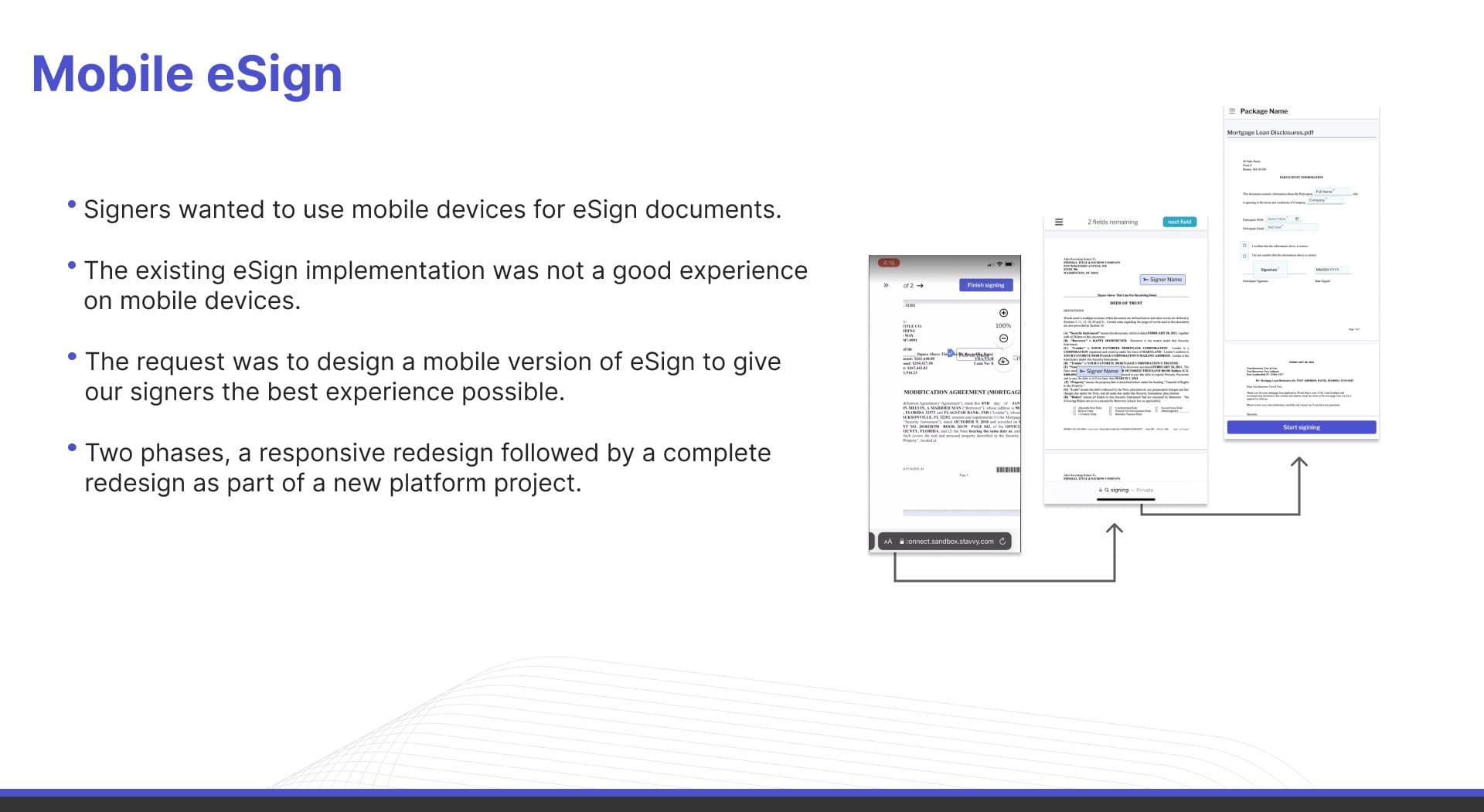
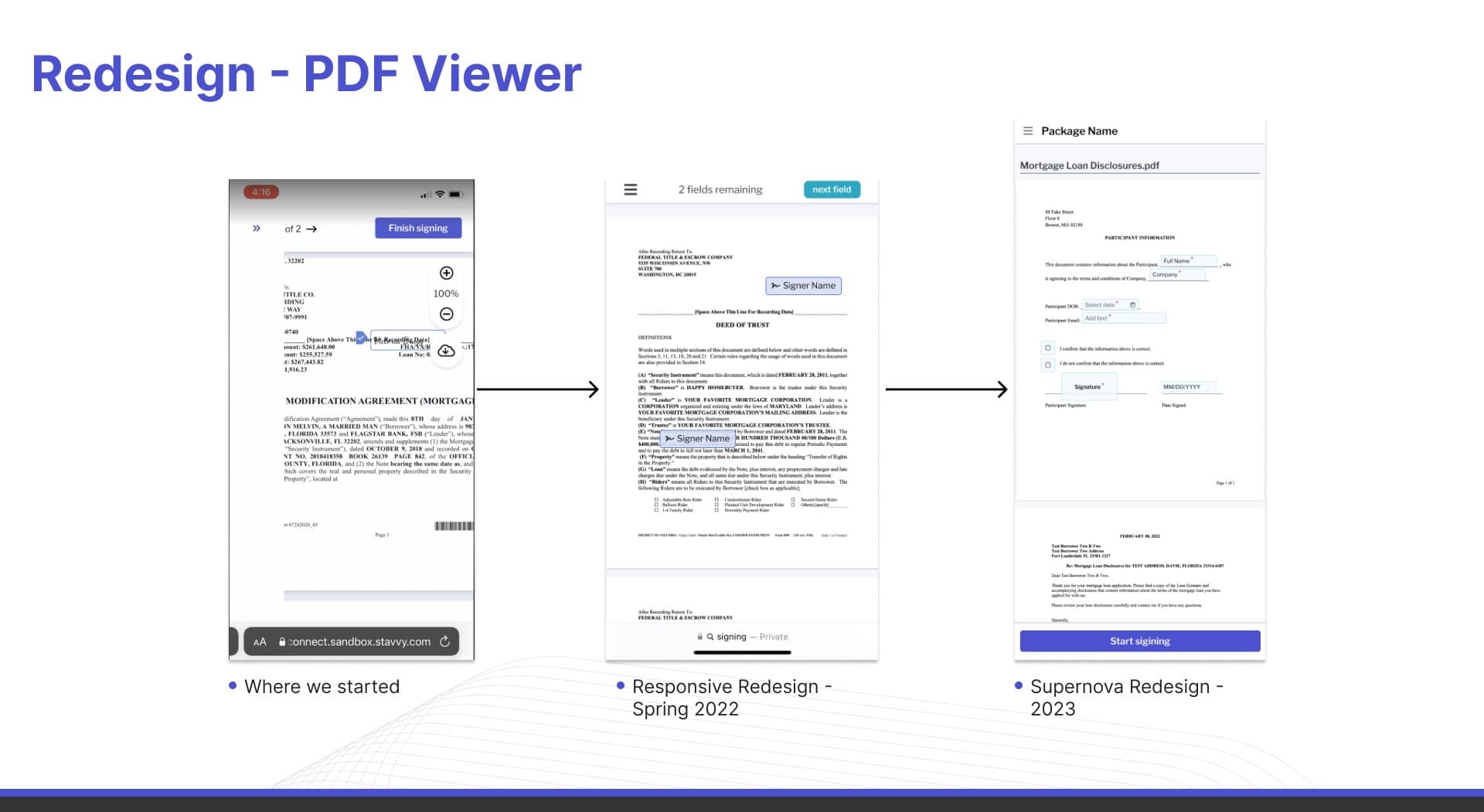
Early in my time at Stavvy it became obvious the mobile eSign experience was a significant source of customer frustration. We tackled it in two phases: one immediate and pragmatic, one more ambitious.
Phase 1: Responsive triage
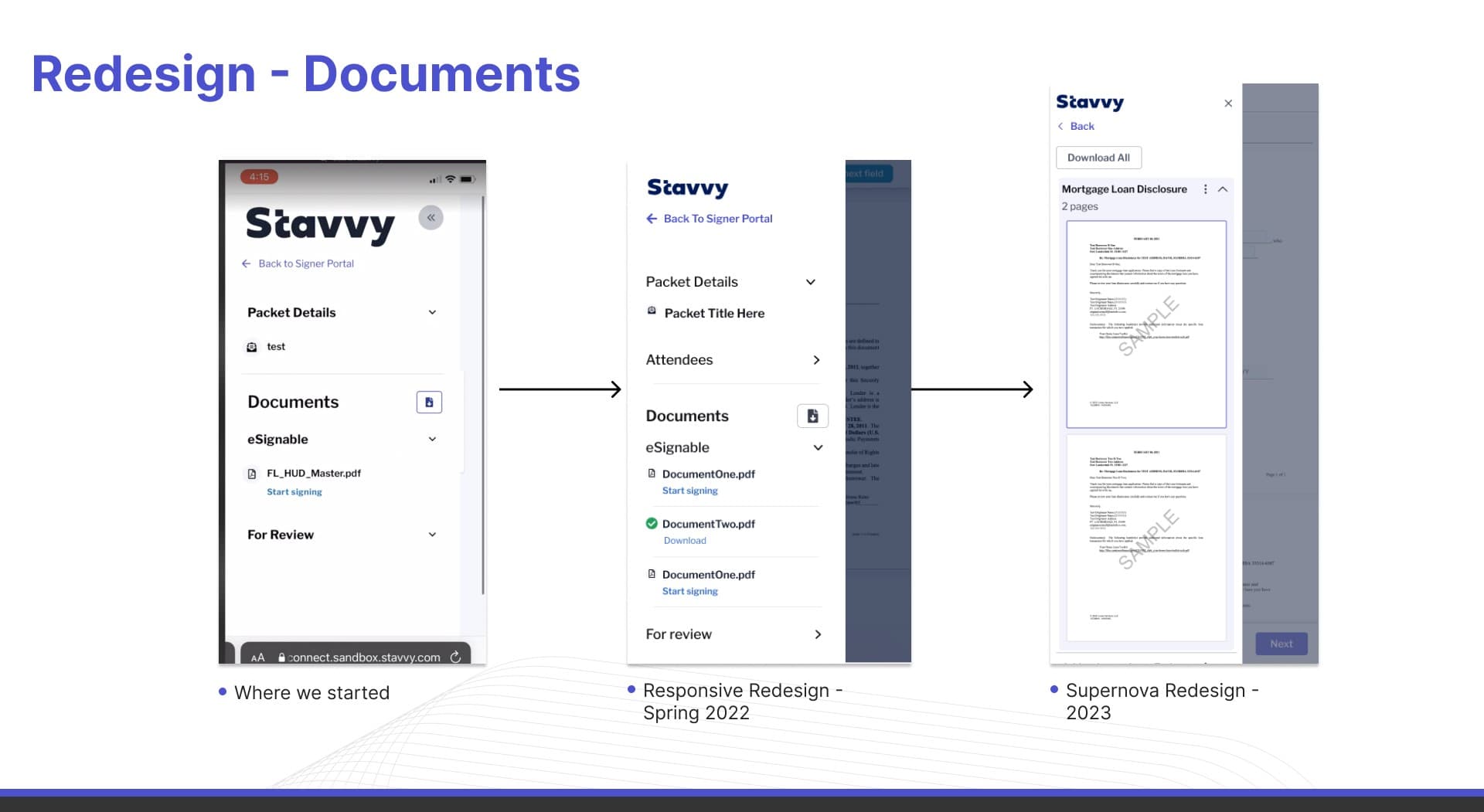
Working closely with front-end engineering, we defined responsive behaviors that made the existing signing experience genuinely usable on mobile. This wasn't a redesign; it was stabilization. Getting the experience to a reliable baseline so we could understand what the real problems were, not just the most visible ones.
Phase 2: Rethinking from the ground up
The deeper opportunity came with Stavvy's shift from a monolithic codebase to a new modular architecture. Years of product growth had created an experience held hostage by technical debt: design decisions we wanted to change but couldn't, because the old code wouldn't allow it.
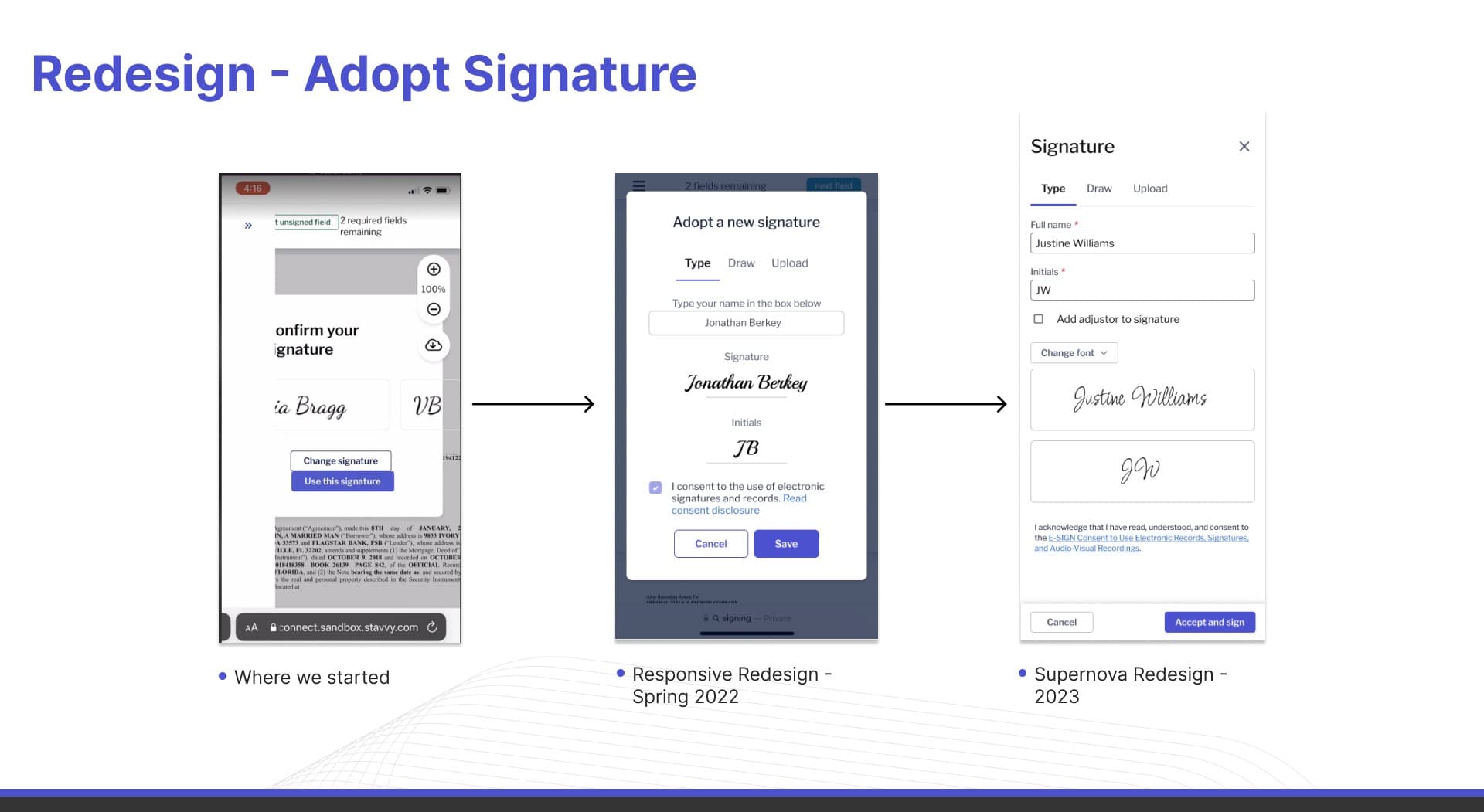
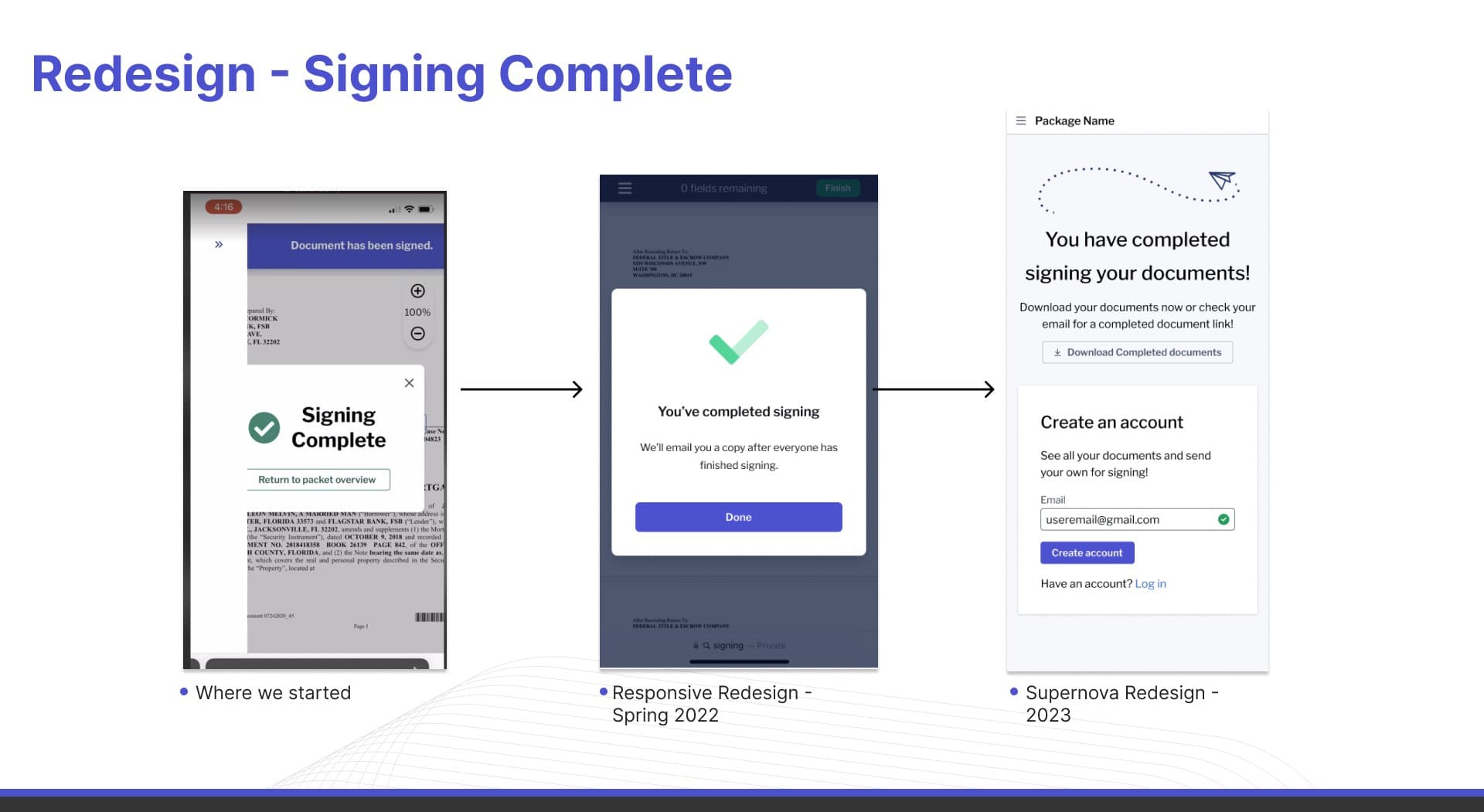
The new architecture broke those constraints. Phase 2 was a genuine rethink of the entire eSign experience: interaction model, document navigation, signing flow, error states, designed for the modular platform and for the realities of a first-time homebuyer on a phone.
General platform design
The surfaces that held everything together.
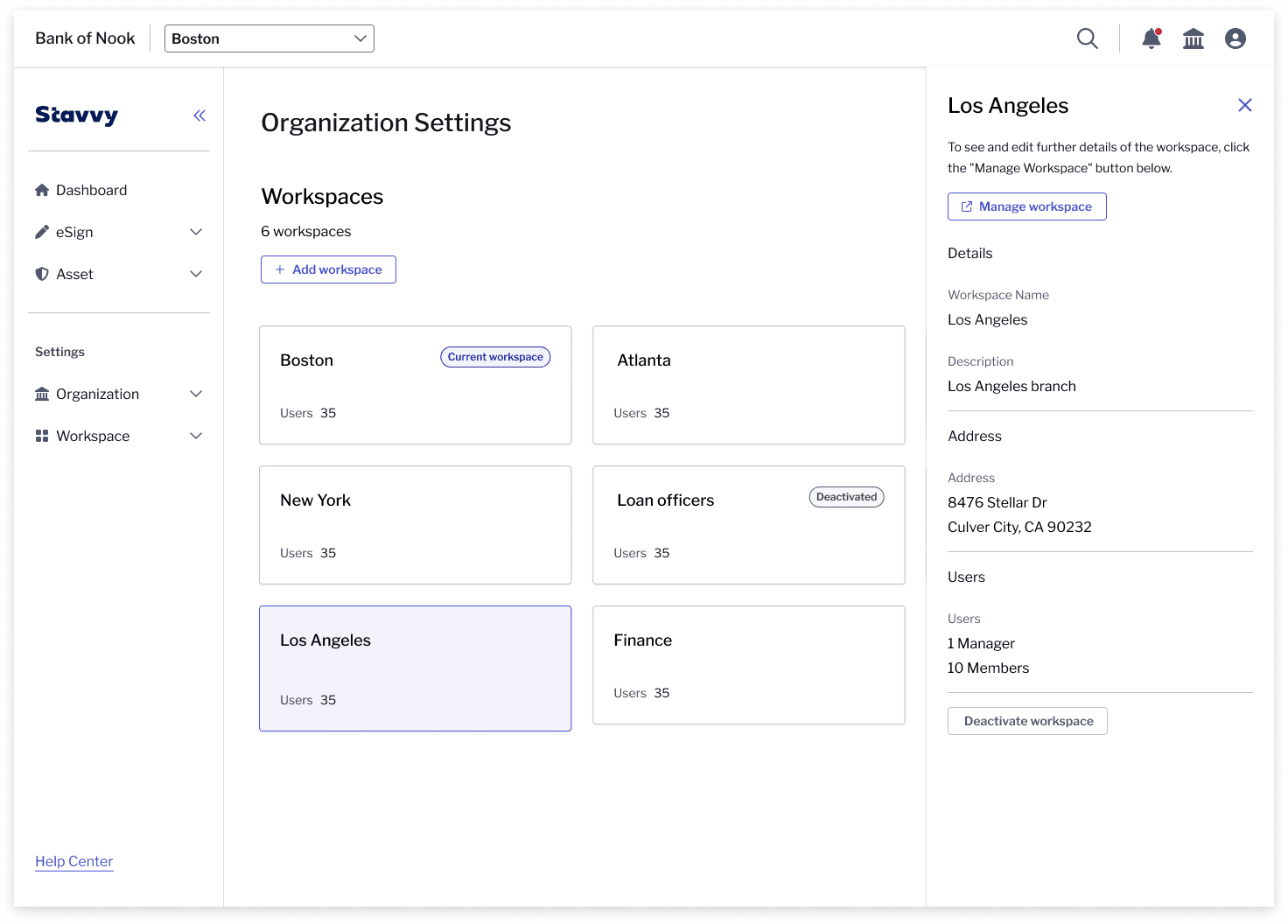
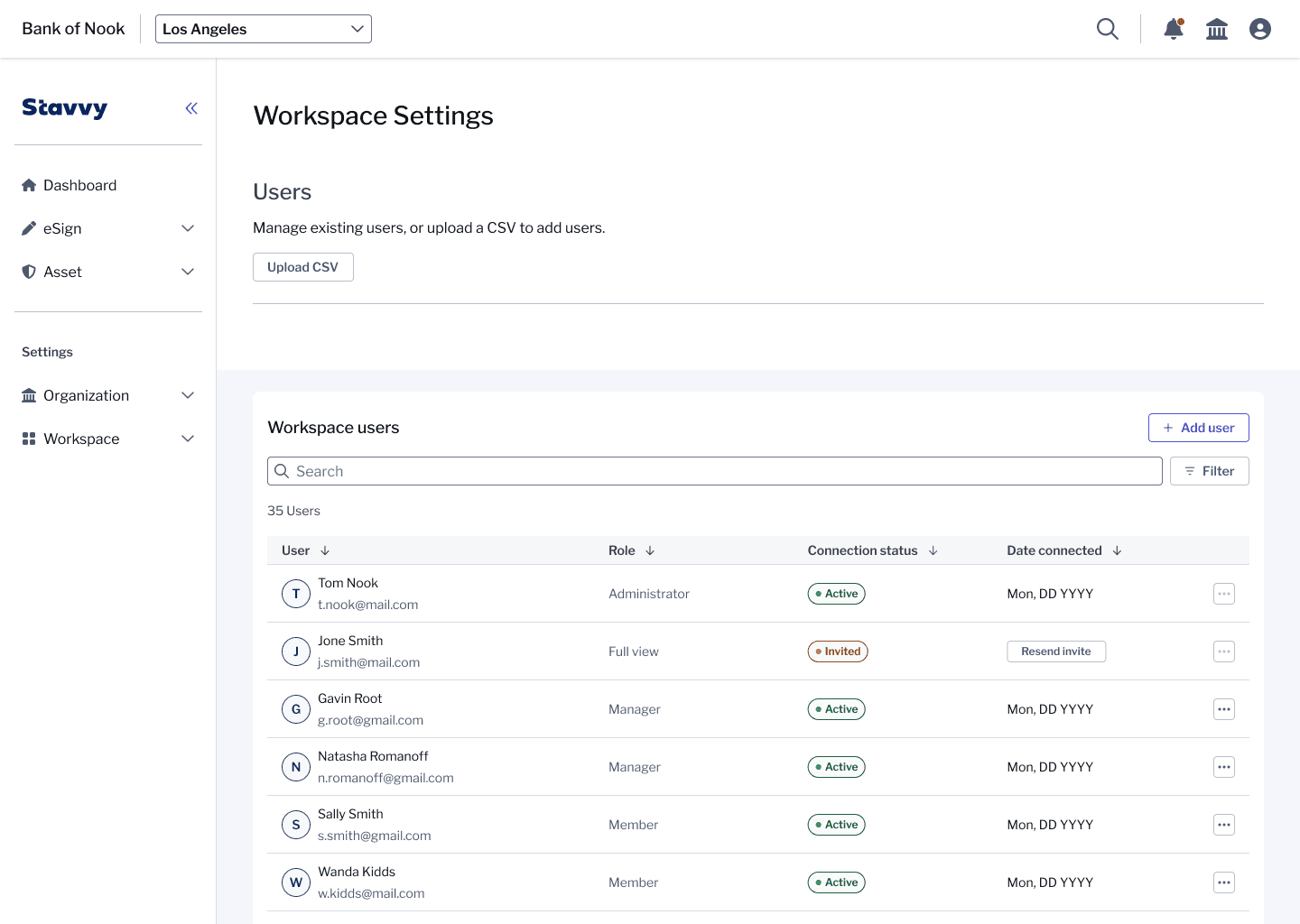
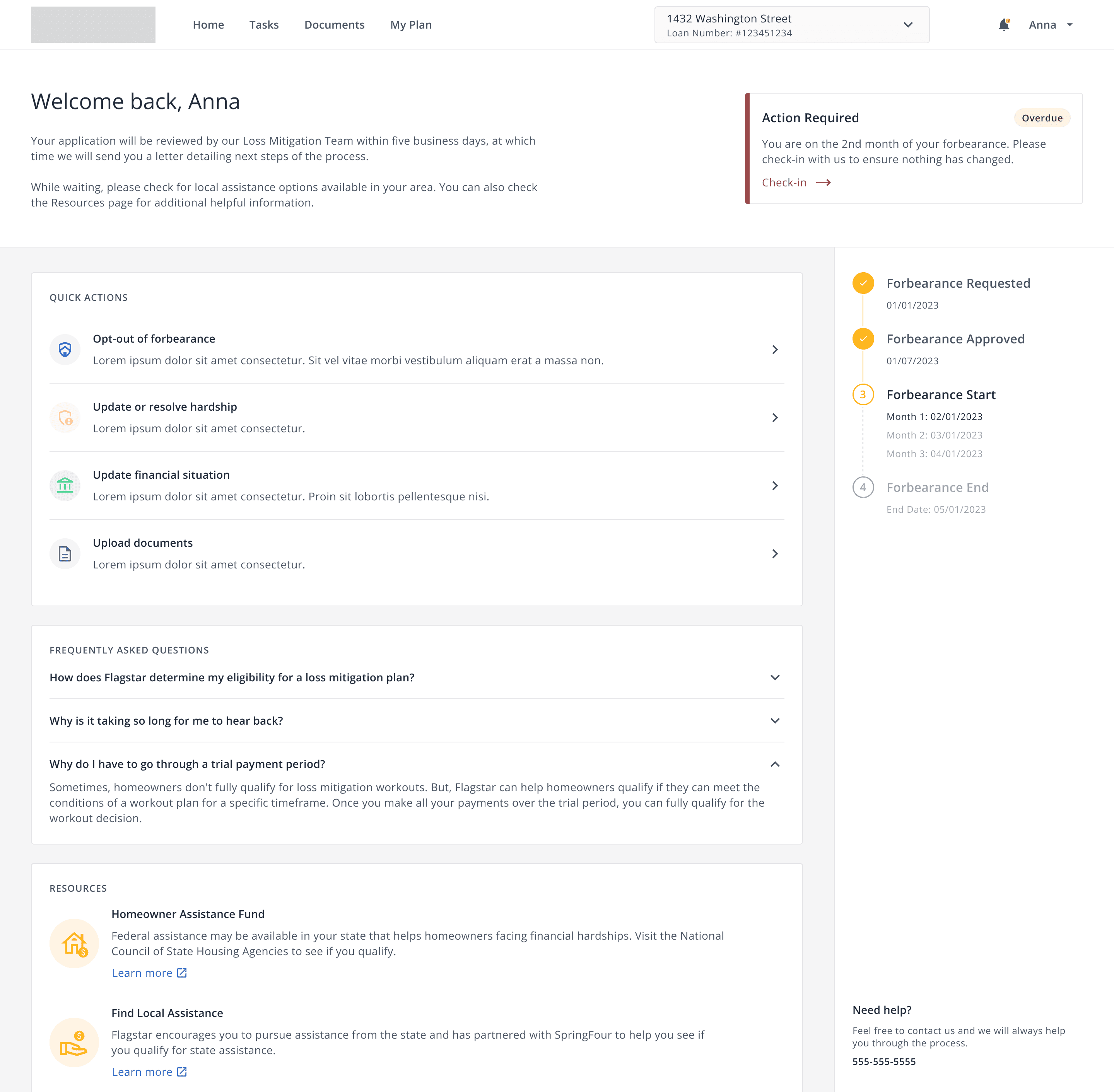
Beyond the marquee redesigns, the day-to-day design work covered the full breadth of the platform: meeting management, workspace settings, user administration, and the white-label homeowner portal that consumer-facing lenders deployed to their own customers.
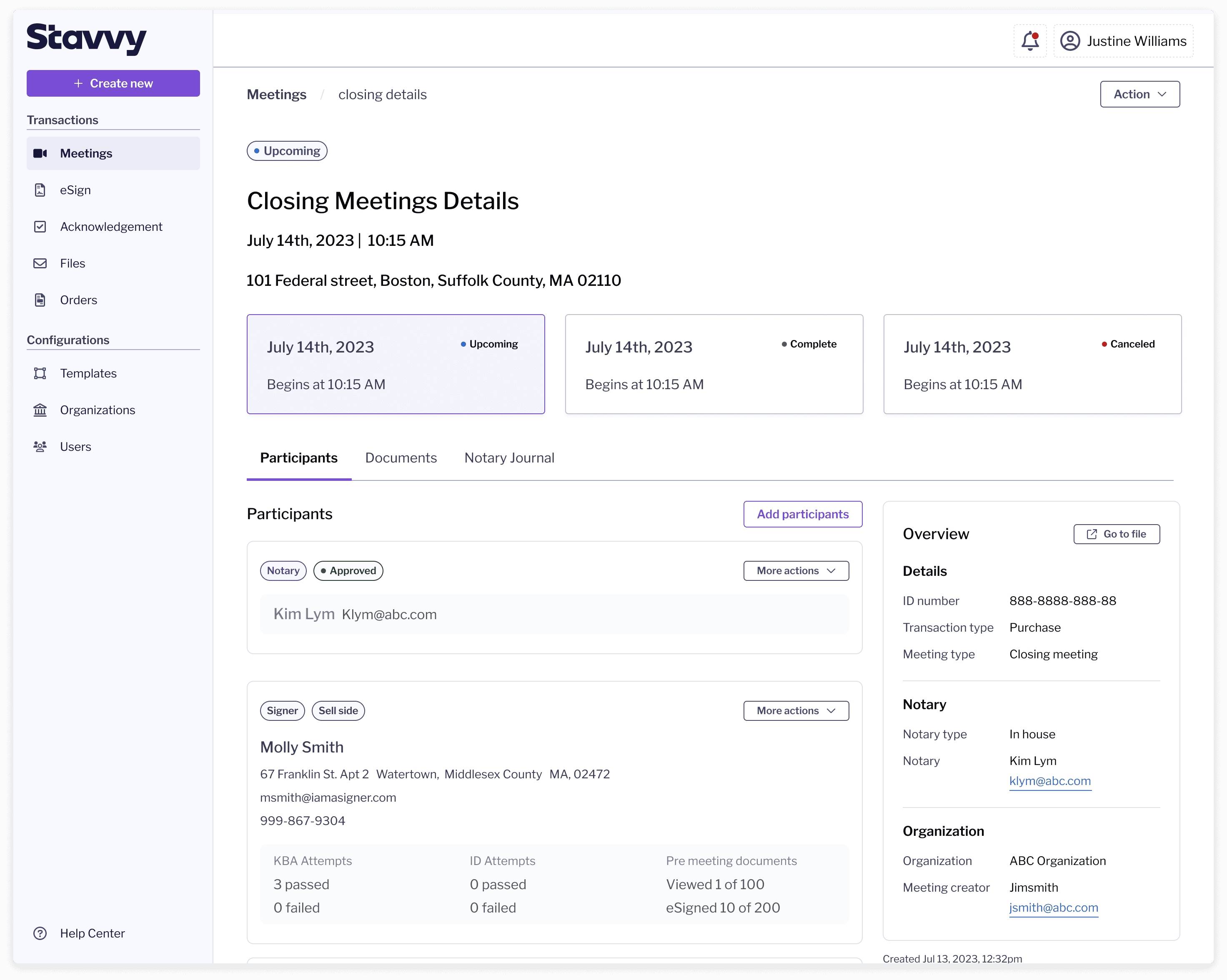
Meeting Details
Workspace Settings: Locations
Workspace Settings: Users
White-label Homeowner Portal
Design leadership in a startup means wearing more hats than you planned for.
At Stavvy I wasn't just leading the design function; I was building it. Growing a team of five designers and two researchers, establishing research practices, creating design system processes, and partnering with product leadership on strategy and roadmap.
For several months I also carried acting Director of Product responsibilities while our Director was on maternity leave, managing four PMs, running product reviews, and ensuring we kept shipping without losing design quality. It was demanding and genuinely clarifying. It confirmed that I think about design problems as product problems, and that the two functions are most effective when they're deeply integrated.
What designing at startup speed teaches you.
Stavvy sharpened something I now treat as fundamental: the difference between doing more and doing the right thing. With five products, a growing team, and real users depending on every release, you develop a fast instinct for where design creates durable value versus where it's solving surface problems.
The eSign Phase 2 work (the full modular rethink) represents some of the most considered design I've done. Starting from constraints that had been locked in by years of technical debt and being handed a clean slate by a new architecture is a rare opportunity. We used it well.
The eVault work taught me something different: strategic restraint. Not every problem deserves a full redesign. Sometimes the most valuable thing you can do is the most targeted intervention that moves things forward without consuming capacity you don't have. Knowing the difference is a skill that takes real experience to develop, and I'm glad I had the chance to practice it.